Avicenna, 980-1037 Jābir ibn Ḥayyān Rāzī, Abū Bakr Muḥammad ibn Zakarīyā, 865?-925? Richard, de Fournival, fl. 1246-1260
Published / Created:
[ca. 1350]
Call Number:
Mellon MS 2
Image Count:
96
Resource Type:
Archives or Manuscripts
Abstract:
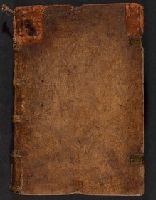
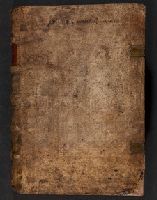
Manuscript on parchment of a collection of practical alchemies and procedures, the earliest such manuscript in the Mellon collection. Contains texts transmitted from Arabic sources and what appear to be European additions to the literature and practic...
Description:
Alternating red and blue capitals throughout, some headings in red, many capitals stroked red, slight filiform decoration to opening initial of the volume, the rubrics and decoration probably by one of the scribes or another closely related hand.
Subject (Name):
Avicenna, 980-1037, Bacon, Roger, 1214?-1294, Duveen, Denis I., bookplate, Geber, 13th cent. Summa perfectionis magisterii, Razi, Abu Bakr Muh ammad ibn Zakariya, 865?-925?, Richard, de Fournival, fl. 1246-1260, and Saumaise, Claude, 1588-1653, provenance
Subject (Topic):
Alchemy--Early works to 1800, Manuscripts, Medieval--Connecticut--New Haven, and Medieval and Renaissance Manuscripts in Beinecke Library
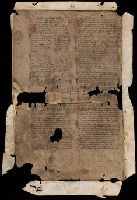
Manuscript fragment on parchment of book two of Avicenna's Canon medicinae as translated from Arabic into Latin by Gerard of Cremona; the section contained in the fragment details a variety of herbs and their medicinal qualities
Description:
In Latin.
Subject (Geographic):
Connecticut and New Haven.
Subject (Name):
Avicenna, 980-1037 and Gherardo, da Cremona, 1113 or 1114-1187
Subject (Topic):
Manuscripts, Medieval, Medicine, Medieval, and Medicine, Arab
Translated by Gerardus Cremonensis (or rather Gerardus Sablonetanus), with commentary by Jacobus de Partibus and additions by Johannes Lascaris; edited by Jacques Ponceau.
His canon of medicine, followed (with separate half-title and individual paging) by his Kitab al-naja (an abridgment of his philosophical work entitled Kitab al-shifa).
His canon of medicine, followed (with separate half-title and individual paging) by his Kitab al-naja (an abridgment of his philosophical work entitled Kitab al-shifa).